Thursday, October 1, 2026





 "Mike, if you don’t quit working here, I’m gonna have to shoot you.”
Mike Daffron had faced his share of hurdles over the years when dealing with City officials about his building projects. But former Mukilteo Police Chief Roger Stam’s “threat” was a first.
Stam was a no-nonsense cop whose approach to law enforcement was, shall we say, unorthodox. His reputation included a story, perhaps apocryphal, about him dealing with a pair of scofflaw teenagers when a call came in about some other crime that was more important. Stam allegedly handcuffed the teens together around a telephone pole and told them to stay put while he took off.
Of course, Stam was kidding about shooting Daffron. Maybe. Daffron recalled another, perhaps mythical story about Stam getting annoyed with a ferry lane motorist who repeatedly cut the line, even after Stam ordered him out of it several times. Finally, Stam walked up and yanked him out of the car through the driver’s side window.
But Stam and Daffron knew and respected each other. A more delicate approach was called for. City officials had all-but given up trying to bully Daffron into stopping work on his project. They refused to approve a needed permit.
Already well known in the community for the unique and beautiful homes he had built for more than a decade, Daffron had branched into his first commercial project. He was converting a house on the southwest corner of Lincoln Avenue and Fourth Street into a restaurant. Today it’s home to Sound Pizza. A vacation rental sits up top.
The standoff between Daffron and City officials was about parking. Although there was plenty of street parking, they said he didn’t have enough onsite parking.
Directly across the street was the old Rosehill School, home to City Hall and the library. Because it was a public facility, City officials said they didn’t have to abide by the same parking requirements as a commercial operation.
Problem was, Rosehill also housed several private businesses, including a day care, dance studio, counseling services, and others. Daffron argued that wasn’t fair. So the City kept threatening and Daffron kept working.
That’s when they decided to sic Stam on him. Daffron basically told Stam to take his best shot. The chief backed down. Ninety minutes later, City officials conceded defeat, and Daffron got his permit.
Visitors to Mukilteo’s waterfront neighborhood now enjoy the village feel that Daffron created in the area around that first project, the Lincoln Courtyard.
Winding pathways and lush landscaping complement the mixed-use buildings, which feature apartments above shops, services and restaurants. As with all his projects, Daffron believed in minimal alteration of the existing landscape, and would leave towering evergreens in place whenever possible. He’d rather build around a tree than remove it.
He would expand the original Lincoln Courtyard across Fourth Street, again redeveloping, incorporating, and blending existing homes or buildings with new structures that retained that comfortable, village feel.
The old Rosehill School has since been replaced by the modernistic Rosehill Community Center, which Daffron doesn’t much like. But his influence and impact around the center remain. Besides the mixed use developments, he provided needed landscaping on public property at his expense.
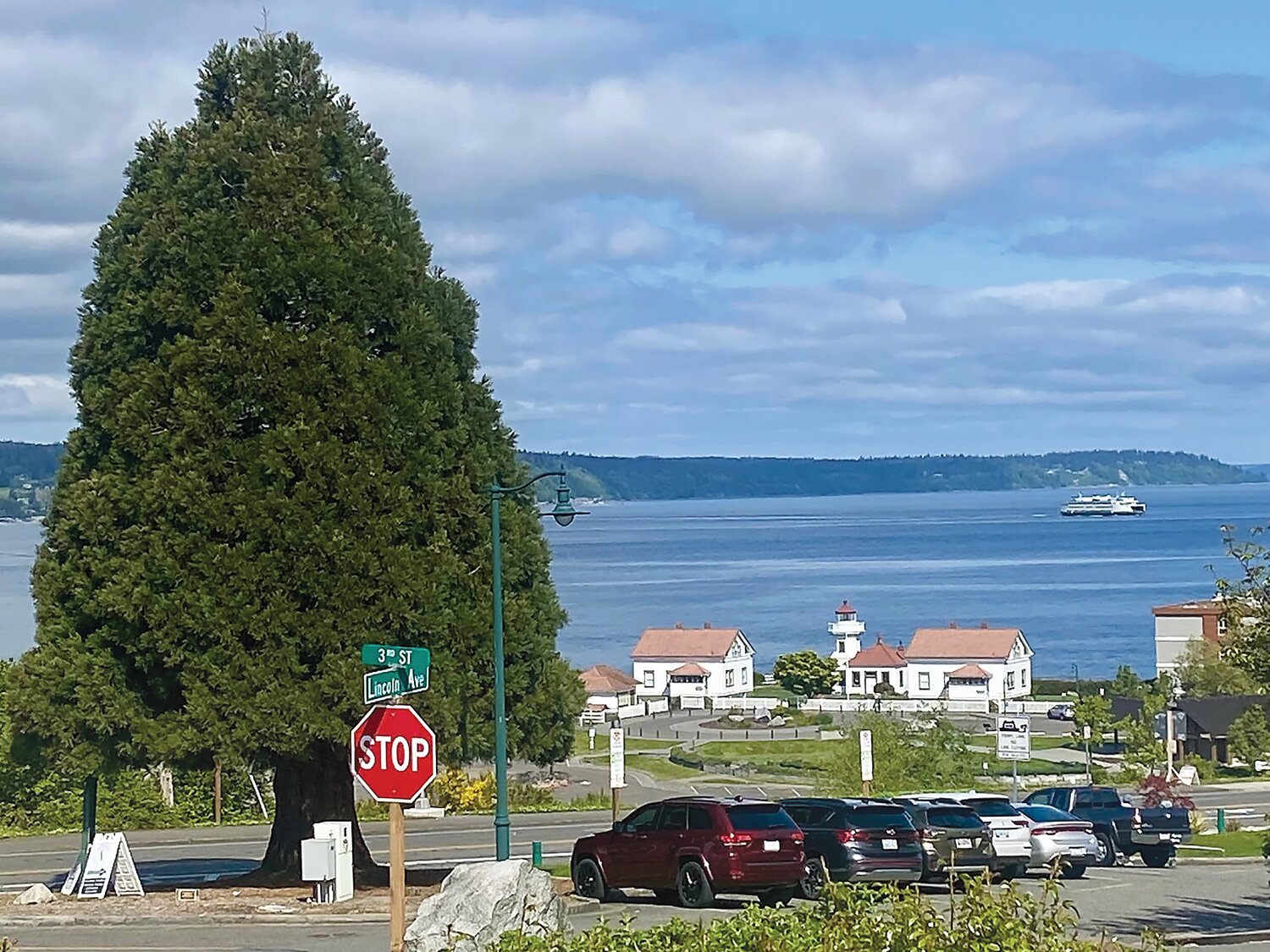
For instance, some of the Kwanzan cherry trees he planted along Lincoln Avenue still stand. The City later added more along 3rd Street. Daffron also thought the scraggly, Charlie Brown-like tree in the tiny greenbelt at Lincoln and 3rd that the city used as its official Christmas tree was an embarrassment. He snookered city officials when he convinced them to let him replace it with three bushes.
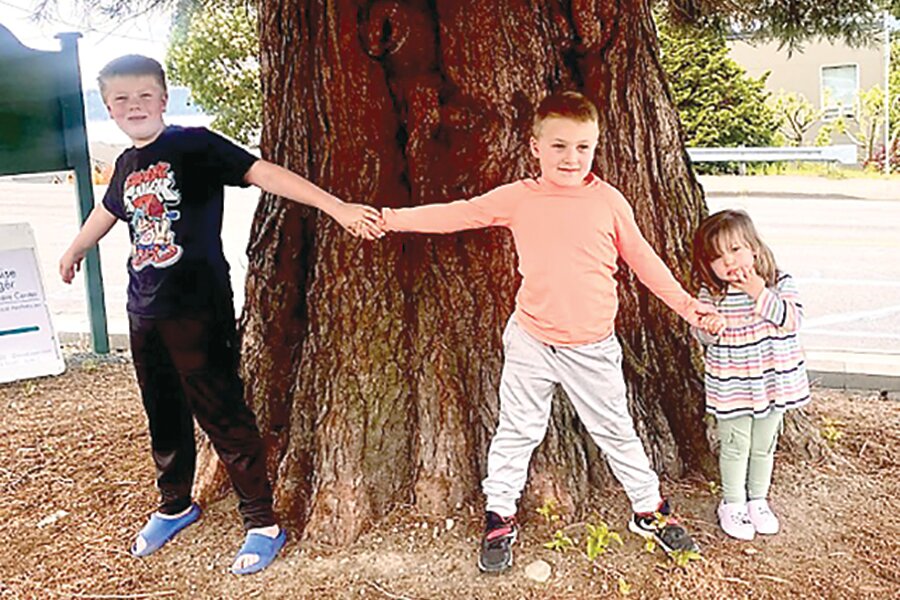
In truth, they were sequoias. Two of the three survived. One was transplanted to 92nd Street Park, where it thrives; the other towers about a 100 feet and serves as the city’s official Christmas tree now.
The road less traveled
Daffron didn’t seem destined to become a builder. Following college at Western Washington University in Bellingham, he became an art teacher at an Edmonds School District middle school. But his family history hinted at a different path.
His grandfather, Frank Hargraves, was a developer in early Mukilteo, building and platting lots in areas that would become among the town’s most prized neighborhoods. “Olympus Terrace was his project,” Daffron said. “Bluff lots went for $3,000 apiece.”
His mother, Francis, also interested in architecture, designed the family home on 92nd at 53rd Street, and his father and grandfather built it.
Even as he embarked on a teaching career, Daffron had an itch to build. “I always wanted to build my own house,” he said. At that point, he wasn’t thinking about changing careers. He just wanted to scratch that itch.
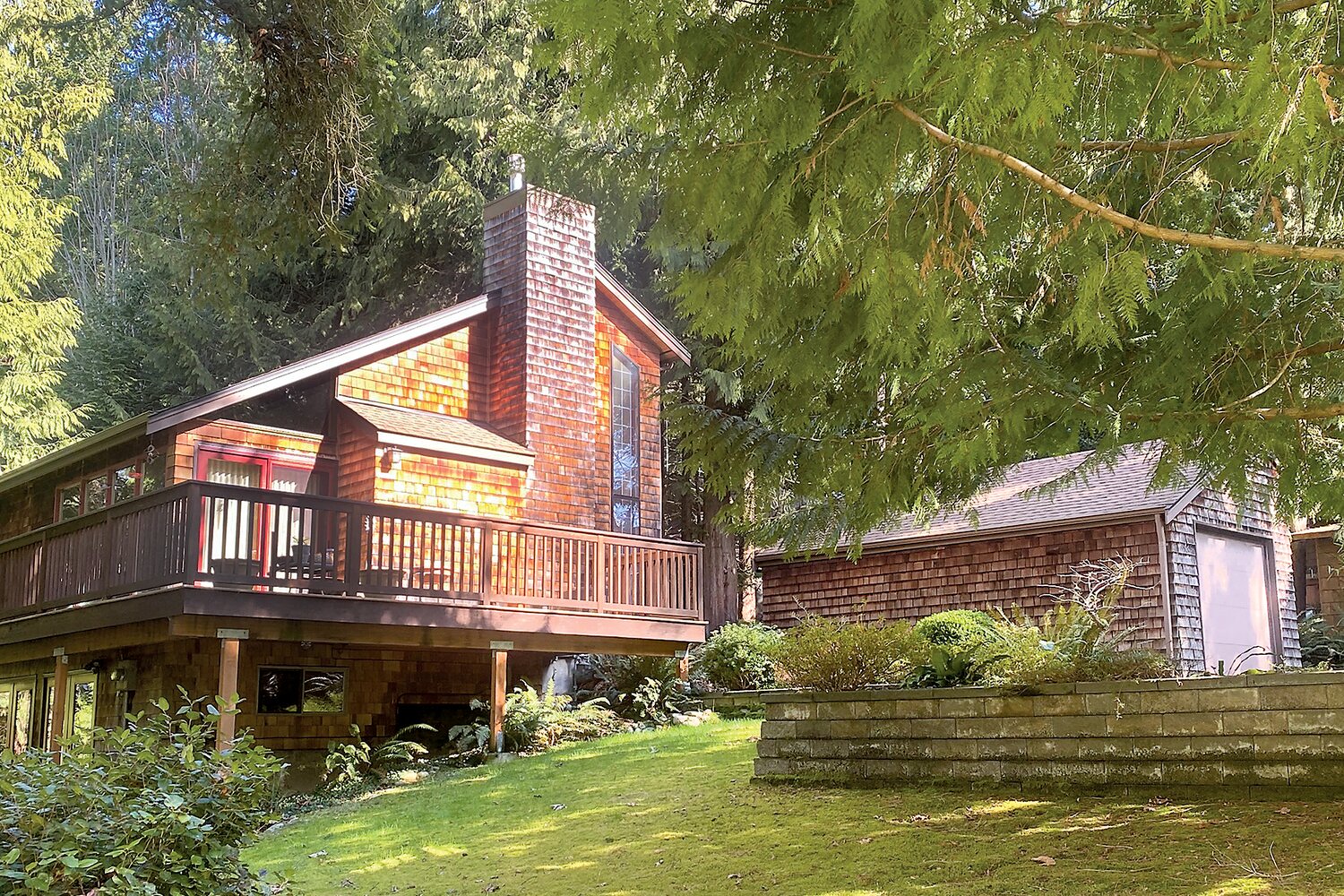
So, in 1972, he built a home in the woods on 52nd Avenue West. It featured an architectural style that would become Daffron trademarks, such as cedar shingle siding, to better blend in with the surrounding forest, small windows on sides facing streets, and big windows on sides facing forest.
A devotee of minimal development footprints, he thought stripping acres of forest and then throwing up the mini-mansion tracts that other developers were building was wrong-headed. Daffron’s houses are small, ranging from 800 to 1,500 square feet, typically two bedrooms and two baths, with only a one-car garage.
Typically modest, Daffron said, “There’s so many things I’d change today. Most of the houses I built were basically a box with a couple of hangouts to build some interest. But it was nice when people appreciated what I was doing. I don’t understand clearing a lot, cutting down the trees, then building a house and replanting new trees. You should leave it as natural as you can.”
When he finished his house, he talked an editor at the Seattle Times into featuring it as Home of the Month in the Real Estate section. It was scheduled for January. The night before the open house, it snowed, and Daffron figured no one would show up.
But show up they did. Lots of them, including a couple from Bellingham who bought the architectural plans and replicated it there.
Daffron lived in that first house five years, selling it to a couple, who live there still, for about $45,000.
That first effort made the itch worse, and Daffron retired from teaching. “I figured I’d be locked in for life if I stayed any longer.”
Along with new homes — he would build nearly 60, one at a time, over three decades –– Daffron developed a 3-and-1 lifestyle plan. He would work three years, then he and his late wife Leah would travel for a year. “That didn’t work out,” he lamented.
For many years, Daffron worked with a sidekick, Mike Krajack, who rode up on his Harley one day hoping Daffron would give him a job. Krajack had zero experience, saying he wanted to learn the craft so he could build his own house. Daffron sent him away, but Krajack persisted, and on his third try, Daffron gave in.
“It took about a week, and he was better than me at everything,” Daffron said, laughing. “He was fast, he had good ideas, and – as a bonus – he was a good storyteller.”
Although retired, Daffron’s architectural vision and development philosophy live on.
Elizabeth Erickson, Daffron’s wife and a well-known real estate agent in Snohomish County, said agents still market him when one of his houses goes back on the market, telling prospective buyers, “This is a Daffron house.”
Making his mark
Besides establishing a recognizable style, Daffron became known for his generosity. As he was building the Lincoln Courtyard, he approached Gary and Beth Smith, who were operating a fledgling coffee operation at the back of the old Cheers Two restaurant by the waterfront.
“He was always so generous,” Beth Smith said. “He said, ‘I want you to have a real cafe.’ He believed in us before we totally believed in ourselves.”
With Daffron’s encouragement and support, they opened the Mukilteo Coffee Cafe in 1990, which became the Old Town’s go-to gathering spot. On weekends, as many as 25 people would line up to order. The Mukilteo Coffee Roasters would go on to become a global coffee company, known for working with a family of farmers in several countries who share the Smiths’ goal of producing delicious, sustainably grown coffee.
Smith said Daffron became a treasured “sounding board” for her and her late husband Gary, and it began with him convincing them to open that cafe. “We really felt like he built that for us,” she said. It was Gary, a much-loved character and friend to everyone he met, who got tired of two Mikes – Daffron and Krajack – both responding every time he called their name while working on his future cafe. So he dubbed them Happy Mike (Daffron) and Hippie Mike (Krajack).
Years later, after the Smiths expanded and moved their coffee business to Whidbey Island, Daffron would stop in occasionally for a cuppa joe and visit. One day, the Smiths were gone and a new barista was behind the counter.
“So I ordered a cup of coffee, and when he rang it up I told him Gary always comped it for me,” Daffron said. “He said, ‘I can’t do that.’ I told him, ‘But I’m Happy.’ He said, ‘I don’t care how happy you are, you still have to pay.”
Hard-nosed and helpful
Brian Sullivan, former Mukilteo mayor, state legislator and current Snohomish County treasurer, also enjoyed those early days at the courtyard. Following a handful of previous restaurant owners in that first building conversion, Sullivan opened Riley’s Pizza, which became a popular meeting place for the civically- and politically-inclined.
But some Old Towners resisted the changes Daffron brought. Riley recalled Daffron deciding an old yellow house on the property couldn’t be saved, so he prepared to tear it down to make way for the future Mukilteo Coffee Cafe.
The house’s tenant was unhappy he’d have to move out. “He drew a circle on the wall in his living room,” Sullivan said. “Then another inside it. Then another. And another. Then he pulled out a .357 Magnum and started shooting.” As they demolished the house, the two Mikes pulled a number of bullets out of the wall. A few reportedly hit a house across the Speedway.
Later, Sullivan would buy a pair of buildings at the courtyard as Daffron began divesting his holdings. “He was a hard-nosed landlord,” Sullivan recalled. “But loyal to the businesses there.”
Longtime architect Fred Baxter is among those who appreciated Daffron’s philosophy and style. Although the Washington State University graduate launched his architectural firm in Seattle, Baxter had family roots in Mukilteo, including an aunt who taught at Rosehill School. When he and his wife Jennifer bought a home on the hill above Old Town, Baxter started looking for office space nearby.
It was kismet. Daffron had an open space at the Lincoln Courtyard, and Baxter moved in. “He was working on the courtyard at the time, and it was good exposure for me,” Baxter said. “I learned quite a bit from him. I had the architectural degree, but I learned from him.”
In typical Daffron fashion, he was generous with his time and expertise, helping Baxter build his business, including referring clients to him. Plus, Baxter noted, in the 10 years he rented his office in the Courtyard, Daffron never once raised his rent. Reminded of that point recently, Daffron laughed, “Tell Fred he owes me back pay.” Like others, Baxter appreciated Daffron’s minimalist style. “He marched to his own drummer,” he said. And he tried to incorporate Daffron’s vision in his own designs.
But not too much.
Whenever owners of a Daffron house wanted some remodel work done, he would refer them to Baxter. “They’d always say, ‘I love my Daffron house,’” Baxter said with a laugh. “Then they’d say, ’Can you add another garage?’ Or ‘Can you enlarge my kitchen?’”
When Daffron began building commercial projects, he needed investors. Old friends Gary Eveland and Tom Nielsen joined in, along with a few minor partners, and the END Group was born. Besides the Lincoln Courtyard, other notable projects the END Group developed included the old Larry’s Pharmacy on the Northeast corner of Lincoln and Third Street.
Daffron converted a bland brick-and-concrete storefront into a restaurant with a courtyard, adding an adjacent office that became an early home for The Beacon. Next to it he built another mixed-use building where Erickson operated her real estate office downstairs, and rented out a small apartment upstairs with the best view in town.
Daffron owned several other Old Town properties that he had planned to develop, but increasingly stringent zoning, stormwater regulations, and other rules made it near impossible to build the way he wanted. So he began selling off his remaining parcels.
Baxter, a perfectionist who appreciated Daffron’s philosophy but also more accepting of the hurdles, said these days there is no way around using up virtually the entire property footprint to meet code and make a profit. “I like to think of them as Daffron buildings on steroids. I just added another form to his formula.”
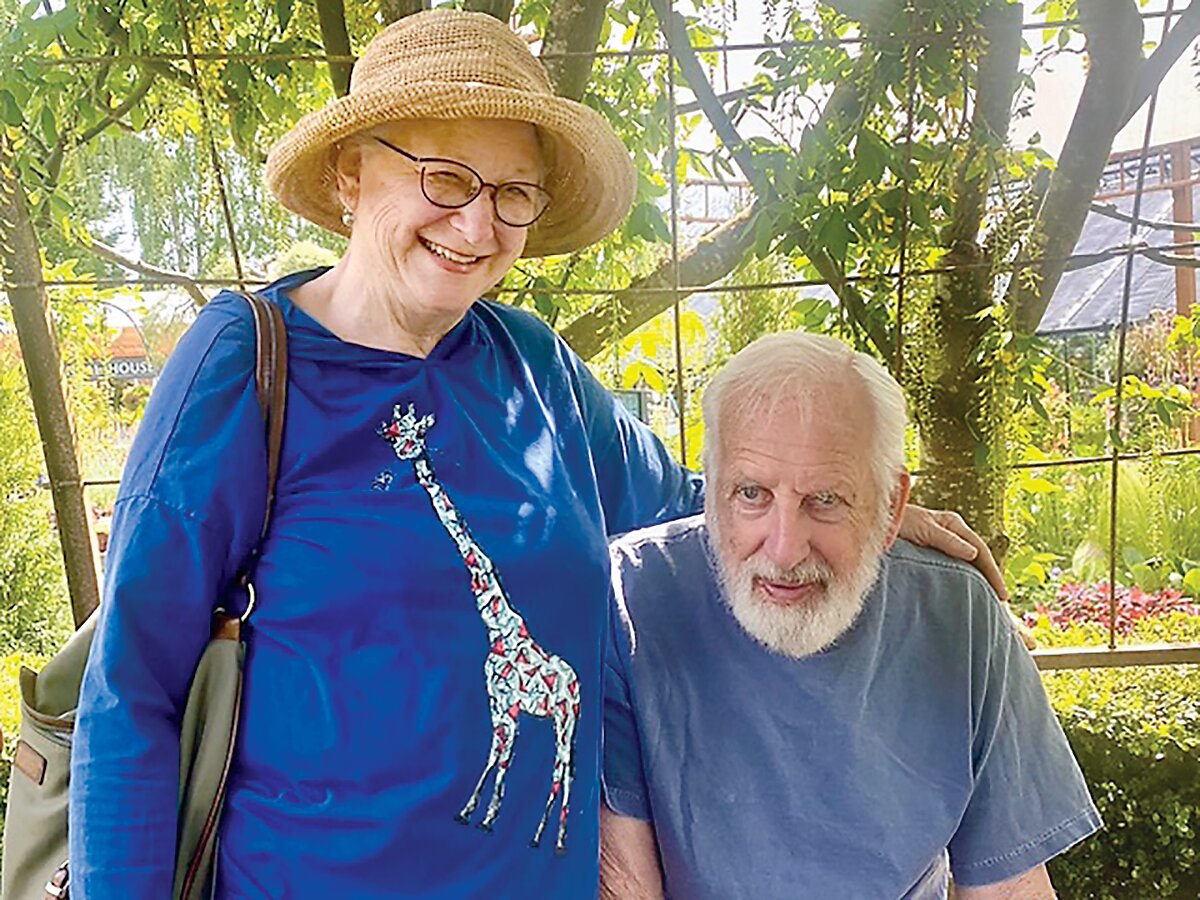
Both Daffron and Erickson have retired. They’re enjoying life in several homes they own, including on Whidbey Island; Victoria, British Columbia; and perhaps Daffron’s favorite, Lopez Island. In the ’70s, he bought several acres on the waterfront there and began building that getaway, a piece at a time. It’s there that the couple can relax and rejuvenate, away from the hustle and bustle. It also gives them the space to face Daffron’s newest challenge. The 81-year-old has Lewy body dementia, a neurodegenerative disease for which there is no cure.
David vs. Goliath
People who know Daffron all describe him in similar ways: thoughtful, caring, compassionate and fair. He was known to bend over backward to help tenants who were struggling, even letting some live in one of his houses or apartments rent-free for as long as necessary.
He didn’t, however, hesitate to stand up to those he considered unfair, greedy SOBs. A favorite story involved a condominium project going up next to undeveloped land he owned in central Mukilteo. Much to his chagrin, developers had clear-cut their property before construction, felling grand, decades-old trees.
But they screwed up when they accidentally cut down a stand of trees on Daffron’s property. They were mainly alders – considered “weed trees” – but still, it was the principle of the thing. He went to the builder and pointed out their mistake. By law, illegally cutting down trees resulted in triple damages to the property owner, so Daffron told them, “You owe me $5,000 for the timber.” They blew him off, saying, ”We’ll see you in court.”
Daffron had a better idea. When the project was finished, and the developer started advertising an open house, Daffron printed a stack of signs that stated, “High crime area, please be careful.” He wasn’t lying. There actually had been a recent uptick in crime, he said, generally low grade and non-violent, but still. So he may have exaggerated, just a bit. Stam probably would have approved.
Daffron posted the signs on his remaining trees. He said prospective buyers drove up, saw the warnings, and turned around. The builder fought back. “They’d come at night and take the signs down,” he said. “I’d put more up the next day, and they’d come back the next night and take them down.” Daffron got a ladder, and posted the signs 30 feet up in the trees, frustrating their countermeasures.
“A week later, they asked to meet,” he said. A Bellevue lawyer drove up in a fancy Porsche and told Daffron, “We’ll ruin you.”
“I told him to go for it, and walked away. A block later, the lawyer caught up and said, ‘The check’s in the mail.’ They paid me $5,000 for a bunch of alders.” An American novelist once said, ”Sometimes, the only way to get justice is to take it for yourself.” Daffron did, and Mukilteo is the better for it.


Comments
No comments on this item Please log in to comment by clicking here