Thursday, October 1, 2026

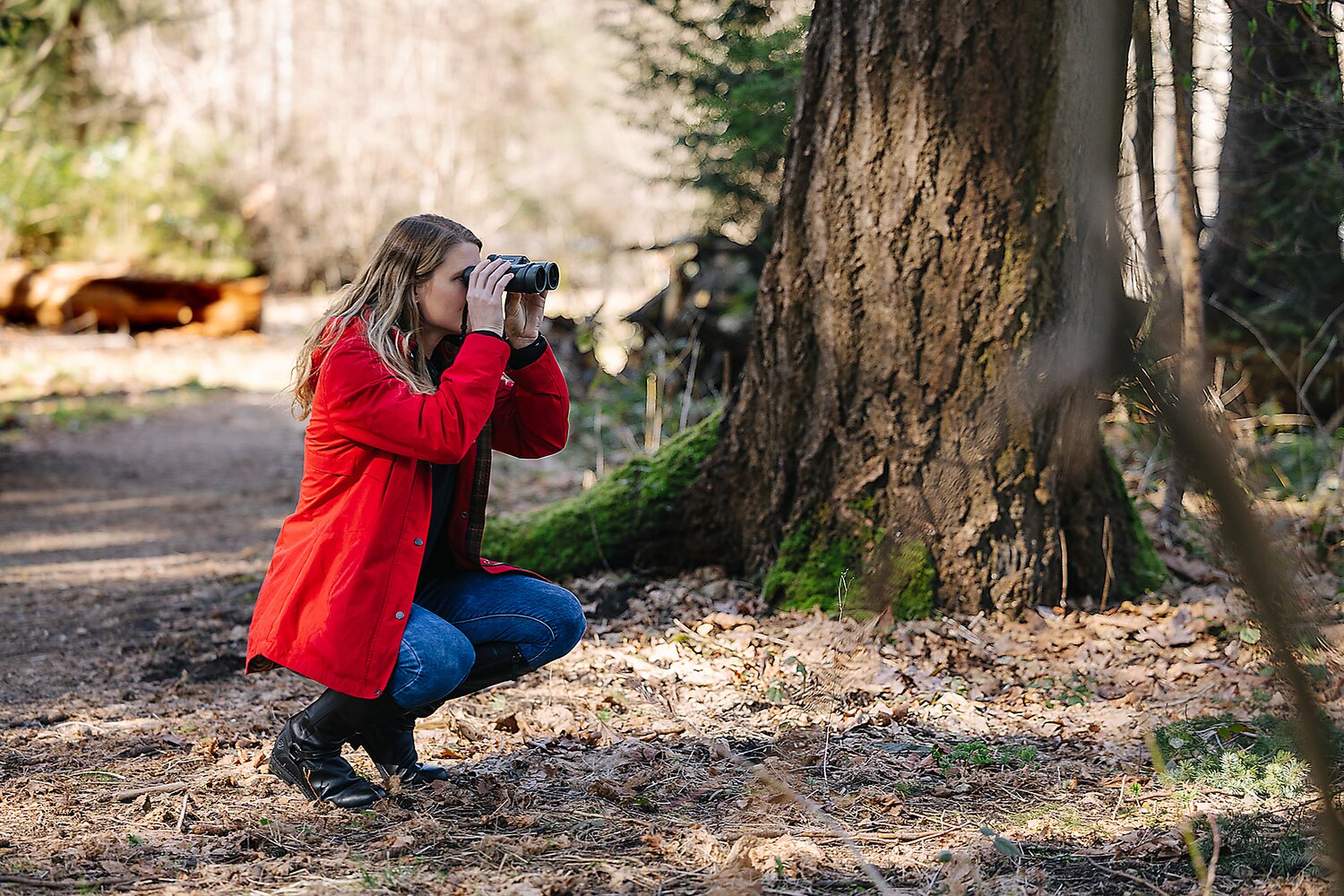
It’s a rainy December day. Sprague’s Pond Mini Park in Lynnwood is empty except for a few dozen ducks and geese. Three older men arrive, sporting rain jackets and pants, baseball caps, and binoculars. The birds all move toward the men as if they know them. Maybe they do: Frank Caruso, Robin Melvin, and Jeff Hambleton spend much of their time in local parks such as this one, watching birds.
But this is no ordinary day of birdwatching. Today is the annual bird count in south Snohomish County and Jeff, Frank, and Robin are part of the team responsible for counting the number and types of birds at hotspots throughout their assigned zone, which covers Edmonds and lower Lynnwood. Teams of volunteer birders are surveying 13 zones stretching north of Mukilteo, east of Mill Creek, even into Puget Sound.
Pilchuck Audubon Society, which serves Snohomish County and Camano Island, runs this count and another in the Everett area. They are part of the National Audubon Society’s Christmas Bird Count, North America’s longest-running community science project. Birders throughout the Western Hemisphere collect data researchers use to examine bird populations and health trends over time.
 Caruso, Melvin, and Hambleton spent the day going from place to place looking for birds and recording the numbers before arriving at Sprague’s Pond, their 10th stop. The three birding buddies are Pilchuck Audubon Society members and volunteers. They met through weekly trips with the organization.
While the ducks and geese aren’t bothered by the dreary conditions, Caruso said the weather means many birds are hunkered down, out of sight of the diligent counters. Melvin added that it’s also harder to hear birds over the wind and rain.
They are advanced birders, but all experience levels are welcome to participate in the bird count. Getting more people interested in birds and birding is a goal birders all share. Pilchuck Audubon also runs the Great Backyard Bird Count in February, when people can get involved from their homes.
While many birds took shelter, the trio and more than 90 other dedicated birdwatchers of Snohomish County braved the conditions and spent the day outside. More than 100 others participated in the count from their homes, counting the birds at their feeders or their yards.
Friendly bunch
Brian Zinke is the director and sole paid employee of Pilchuck Audubon Society. The organization researches, teaches about, and advocates for birds and other wildlife to protect and restore ecosystems.
Zinke and Pilchuck volunteers host events at schools, libraries, nursing homes, and other community organizations to educate people about birds and habitat conservation. Birders are typically a friendly bunch and welcome newcomers. “The ethics and etiquette of birding is to share your knowledge with other birders and non-birders,” Hambleton said. “It’s a very generous community,” Melvin added. This enthusiasm for sharing knowledge and stories is apparent when speaking to longtime birders.
In 2020, the pandemic spurred a birding boom. Between March 2020 and spring 2023, the number of users of the Merlin Bird ID app increased fivefold, to 1.5 million active users, according to the Cornell Lab of Ornithology. The surge was felt locally: Pilchuck Audubon’s current membership of 545 is more than double what it was in late 2019. It’s a tight-knit community. Caruso is from the East Coast. He didn’t know anyone in the area after moving to Washington, but birding provided him with a circle of friends. Fellow volunteer Bev Bowe said she has close friends she likely wouldn’t have crossed paths with if not for birding.
Its members want to keep growing interest and engagement with birding, particularly among groups underrepresented in birdwatching and outdoorsmanship. “This has been kind of this middle and upper-middle class sort of hobby, historically,” Hambleton said. Hambleton said the barrier to entry is low compared to many other activities. You might see hardcore birders with pricy binoculars and cameras, but expensive gear isn’t necessary. “It’s a fascinating and fun hobby, and you don’t have to have fancy equipment or a lot of knowledge; you learn on the go.”
Bowe is on the planning committee for Bird Fest, an annual, two-day event hosted by the City of Edmonds and Pilchuck Audubon, with speakers, classes, and field trips. This year’s event will be held in Edmonds May 31 and June 1. She recommends getting used guide books, instead of expensive new ones that will likely be outdated soon, with names and taxonomy changing frequently.
Some birders travel the world and hike mountains to spot rare species, but serious and casual birders alike can make exciting finds in local parks, trails, and their backyards. “It is a passion, and everybody needs to have a passion,” Caruso said. Birders extol the many benefits the hobby offers both casual and devoted birdwatchers. Studies have found that even casual birdwatching decreases stress and improves mental acuity and long-term mental health outcomes, The New York Times reported in 2022. There’s also physical health benefits: walking regularly improves heart health and decreases the risk of cardiovascular and other diseases.
Mindfulness
Roniq Bartanen runs a small business called SheBirds, which includes a free-to-access list she compiled of female bird guides around the world. For the last few years, she’s led presentations and outings at Puget Sound Bird Fest with a focus on mindfulness. She is passionate about increasing access to birding and nature. As a volunteer guide with Birds Connect Seattle, the city’s Audubon Society chapter, Bartanen leads regular walks in metropolitan areas reachable by public transportation, such as Green Lake.
Roniq said making birding more accessible in cities leads to increased support for and involvement with local conservation efforts and green spaces. “Birding is the gateway to caring about the climate, to caring about the planet, to caring about conservation.”
Marsh restoration
A major effort for Pilchuck Audubon is the restoration of the Edmonds Marsh. In March 2024, the City received a $135,000 federal grant to fund studies and planning for the marsh’s future. Pilchuck director Zinke said the goal is to reconnect the marsh with Puget Sound to create a saltwater estuary; it would be one of only a few of these rare habitats left in Puget Sound and would decrease flood risks in Edmonds.
In 2018, Pilchuck Audubon launched a bird monitoring project at the Edmonds Marsh to collect data on the existing bird population and how it changes in response to restoration projects. Zinke explained that this data could serve as an example for future restoration projects in the region. “Also, just by documenting the species currently there at the marsh, we can show how important this is as a stopover point for many bird species, as well as resident bird species that are there year-round. And use some of that data to hopefully get grant funding or just show policymakers that this is a really important area we should try to protect.” 
Around 96 million people nationwide – more than a third of American adults – made efforts to watch birds in 2022, according to a survey conducted by the U.S. Fish and Wildlife Service. In 2023, the Pew Research Center reported that more than half of Americans believe the federal government should be doing more to protect animals and their habitats. Hambleton said that even casual involvement in birding can impact people’s perspectives. “There is a huge population of people who think of themselves as birders, enjoy birds, and they do, I think, get engaged in the conservation movement through that. They understand what kind of adverse impacts on bird life happen because of development and habitat restriction and climate change. It resonates with them, and I think they understand that and it makes a difference.”
Serious birders regularly sacrifice comfort to get a look at a rare bird. Bowe described being “hunkered down in a freezing cold field with my hands numb and a foot warmer under my hat … so I can find a blue snow goose.” Birding doesn’t need to be this intense, however. “There are so many ways to bird,” she said, explaining that you can watch from your window at home or inside your car at hotspots like Ocean Avenue in Edmonds, or include a 15-minute stop at a local park as part of your commute.
This flexibility makes birding an accessible option for those with limited mobility. Caruso said helping those who need it is the norm in the local birding community. Bowe ended up on the receiving end of this support last year when she fell and broke her arm, a severe injury requiring surgery. While she was recovering, a Galapagos bird was spotted in Port Townsend. Bowe’s friend hustled over, helped her with her coat, and took her with him to spot the rarity. “Otherwise I wouldn’t have, because I couldn’t even lift my binoculars at that point. My friend was like, come on, you’re coming with,” Bowe said.
Caruso said most of Pilchuck Audubon’s weekly trips are not particularly strenuous. Some excursions, through Pilchuck and other groups, are designed to be accessible for those with mobility aids like wheelchairs and walkers. He said people are always willing to lend a helping hand on group trips or adjust the pace to accommodate those who need it.
Bowe leads a field trip to Yost Park in Edmonds with a focus on physical accessibility each year at the Puget Sound Bird Fest. “Because birding is for everybody,” she said. She’s excited to be back this year to host her “accessible-ish” outing and her class for complete beginners that culminates with a new-birders-only field trip the following day.
She is always thrilled to have new birders on the trips she leads throughout the year – “Someone who will actually listen!” Beginners are often nervous about group outings, but Bowe said there’s no reason to worry about not knowing enough or having the right gear. “You’re going to be treated like the gem that you are if you’re a newbie.” She loves seeing newcomers get excited about their first sightings of birds less common to the area, like meadowlarks.
Even for longtime birders like Bowe, there’s always another bird to see, another hotspot to check out, and more to discover about birds. Some people become experts on a specific bird, while others travel the world trying to see as many birds as possible. The endless chase for sightings and knowledge keeps birders hooked.
The count
The night of the bird count, Caruso sent an update: It was the lowest species count in 20 years. He said wind was the culprit. There were still some highlights, like when his group spotted a hermit thrush. Despite the poor weather, 2024’s count had the third-highest number of participants of any Pilchuck Audubon bird count.
The especially low numbers of birds spotted at this count can be attributed to the weather, but bird populations have plummeted for decades. A 2019 comprehensive study found that the bird population of North America has decreased by nearly 3 billion since 1970. Scientists attribute the dramatic decline to habitat loss and degradation from land development and environmental damage.
The birding community has not given up on protecting wildlife. Pilchuck Audubon promotes conservation through political advocacy and educational projects like its Native Plant Demonstration Garden in Edmonds, which aims to inspire people to plant native species that support wildlife in their yards and gardens.
Zinke has lived in various states and parts of Washington, and said support for conservation efforts is especially high here. “Western Washington definitely stands out in my mind as a place where folks are really, really into trying to protect and conserve our natural spaces. They value that here.”
Caruso said Washington is unique in its wide variety of habitats, but he’s seen the damage to wildlife firsthand in the decade he’s been here. “We need to preserve what we’ve got left.”


Comments
No comments on this item Please log in to comment by clicking here